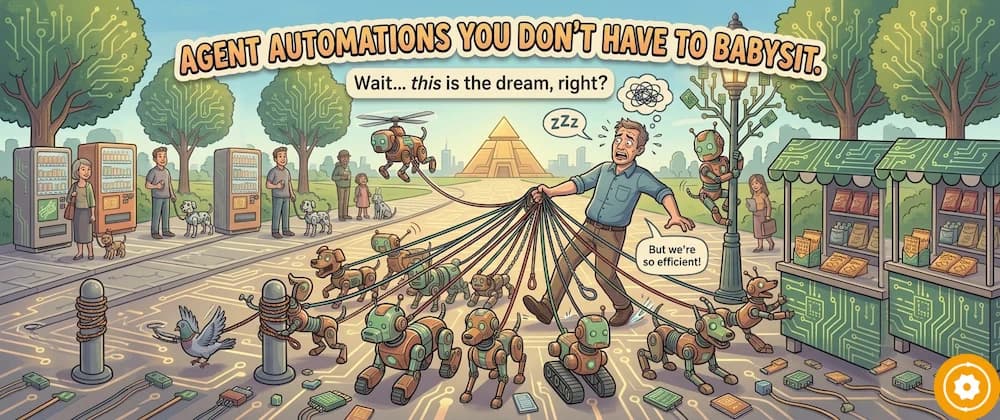
There's a progression in AI automation, and most of the conversation is stuck on the first two steps.
Step 1: Create automation jobs from conversation. This is the breakthrough. Describe what you want in plain language, and an agent sets it up. No workflow builder, no drag-and-drop. It's real, and several tools do it well.
Step 2: Run it in the cloud. Schedule it, trigger it, let it execute without your laptop being open. A lot of good tools are heading here.
This is where most of the market stops. It's also exactly where the questions that decide whether an automation survives production begin.
Step 3: What does the agent get access to? Once a job runs against real data and real systems, the access it has matters. Most setups hand the agent whatever is installed, with no per-job boundaries. Fine for experiments, not for stakes.
Step 4: Who checks the output? Before anything reaches a customer, a database, or an inbox, someone has to verify it's good. Right now that someone is you. For every job. Every time.
Step 5: Who reviews all of it? This is the real bottleneck. Developers know this pattern already: AI writes most of the code now, and review became the chokepoint. The same thing is happening with automations. One job is easy to check. Twenty jobs on schedules is a review workload nobody signed up for, so you either check everything or hope nothing breaks.
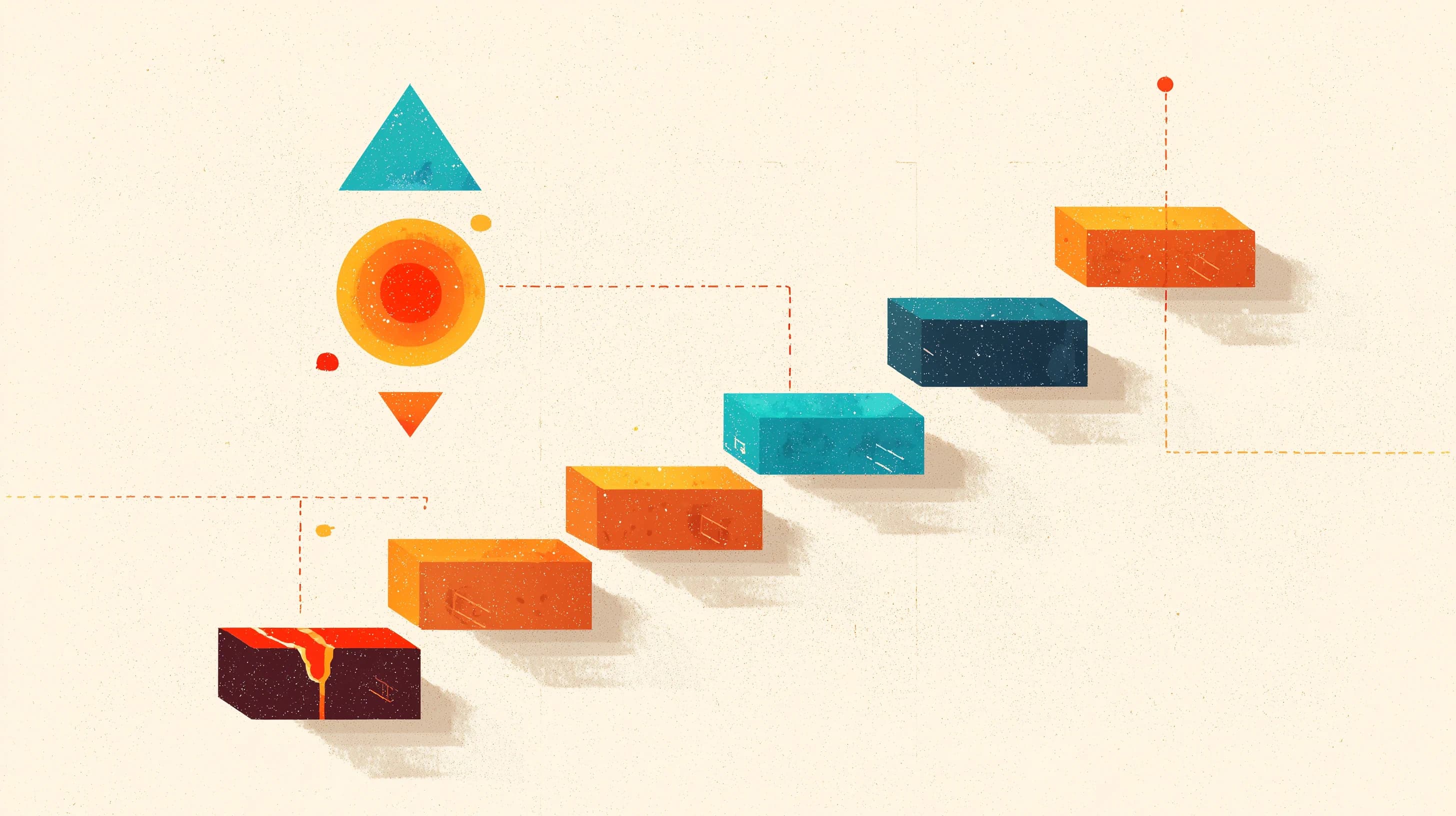
The last two steps are one problem
Checking and reviewing are judgment calls. They recur on every single run, and nothing in the loop is accountable for whether the output is actually right. The fix isn't a smarter agent. It's a checker that's separate from the doer. The overseer is a separate evaluator that reads each run, not just its result, and escalates only what needs a human. Passing runs ship, questionable ones wait for you, and the capability-reliability gap stops being your personal review queue.
That changes what autonomy looks like. It stops being a switch you flip and hope, and becomes a knob you turn up as the review layer earns your trust.
The ladder is why so many AI automations feel magical for a week and then quietly get abandoned. Tools that stop at step two give you demos. Steps three to five are what make automations you can depend on, and that's the part Golemry is built around.