The first time an AI agent sets up its own cron job from a conversation, something clicks. You describe a task, the agent finds the skills it needs, sets a schedule, and starts running. No workflow builder, no drag-and-drop. Language in, automation out.
OpenClaw and the other personal AI assistants made this real. The barrier to automating recurring work dropped from "you need to be technical" to "you need to describe what you want." That's a real breakthrough, and it changes what one person can operate. But there's a gap between a working demo and a production system, and it shows up the moment you depend on these jobs for anything that matters.
The first job works. The tenth is where it breaks.
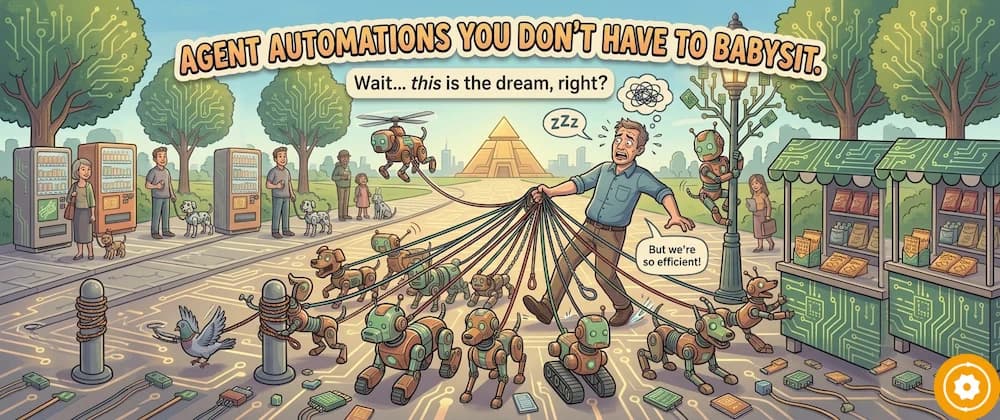
Setting up one AI cron job is exciting. Setting up ten feels different. Each job has its own context, its own quirks, its own failure modes. Some run fine for weeks and then quietly produce garbage. Others work in testing and break in production when the data changes shape. A few just stop, and nobody notices until the thing downstream breaks too.
This isn't a knock on OpenClaw or any specific tool. It's the nature of non-deterministic work running on a schedule. A traditional cron job succeeds or fails loudly. An AI cron job can succeed technically while failing in practice: it runs, it produces output, and the output is wrong. Because it ran without an error, nothing flags it. The more jobs you run, the faster this compounds. You go from "I automated this" to "I need to check all of these" surprisingly quickly.
What's actually missing after job creation
The conversation around AI automation is mostly about two things: making jobs easier to create, and running them in the cloud. Both matter, both are getting attention. The harder questions start after that.
What can the job touch? When an agent runs a job against real systems and real data, the access it has matters. Most setups hand the agent whatever skills are installed, with no per-job boundaries. Fine for experiments, not for stakes.
Who checks the output? Before anything reaches a customer, a database, or an inbox, someone has to verify it's good. Right now that someone is you, for every job, after every run. Past a handful of automations, that's the bottleneck.
What happens when it's wrong? In most setups today, nothing. The job runs, the output ships, and you find out when a customer replies confused. There's no hold-for-review, no escalation when the agent isn't sure.
The missing layer: the overseer
These all point at the same absent piece, and it isn't a smarter agent. It's a checker that's separate from the doer.
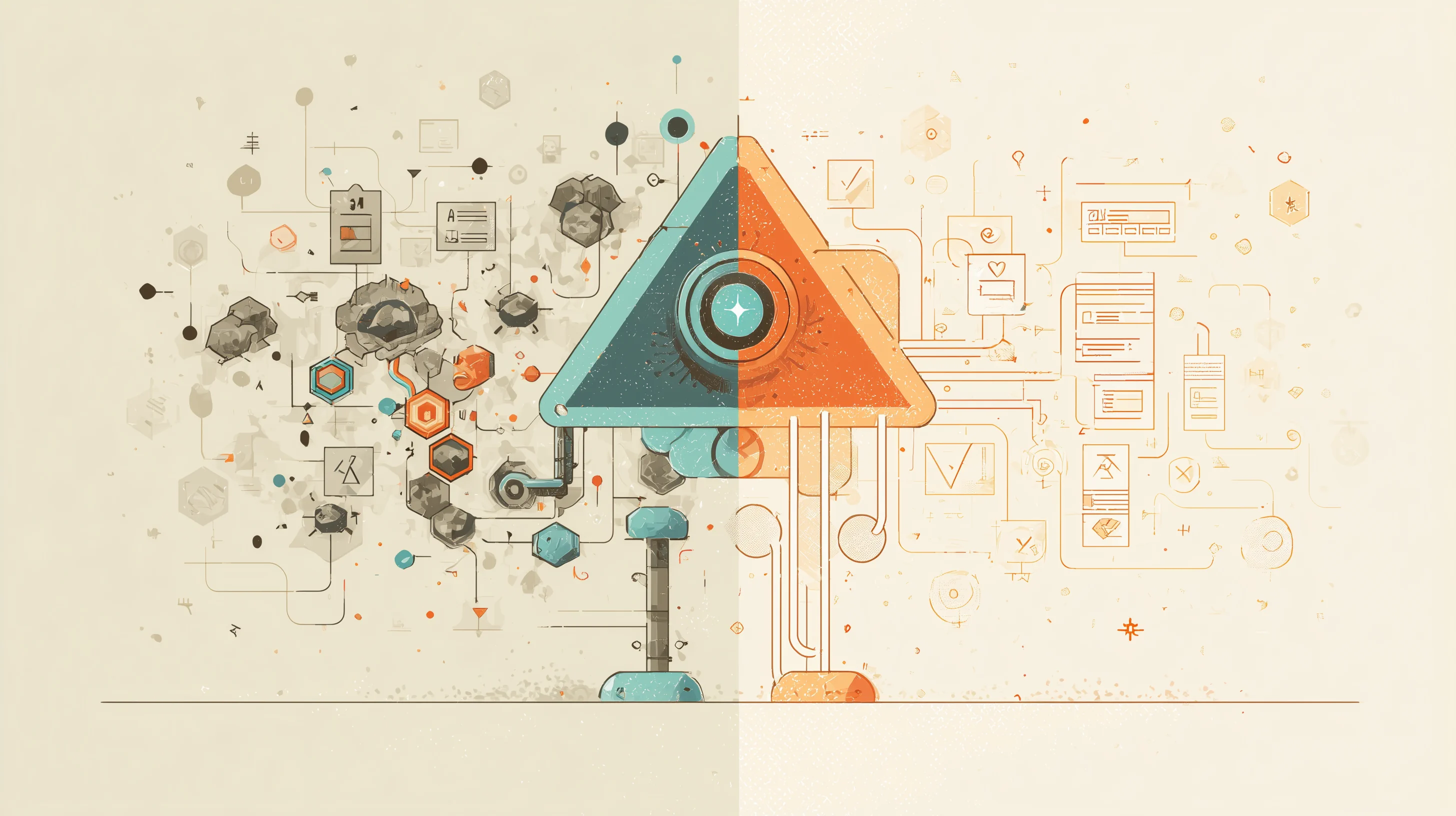
That checker is the overseer. The overseer is a separate evaluator that reads each run, not just its result, and escalates only what needs a human. You don't approve your own expense report, and an agent shouldn't grade its own work either. Apply the same separation to automation: every job gets an independent read, passing runs ship, questionable ones escalate, and your feedback tunes both the worker and the overseer over time. That's the layer that turns a pile of cron jobs into something you can leave alone. Drift and scale are the same story from other angles, all of it the capability-reliability gap showing up in production.
Who this is for
The promise of AI automation is operating beyond your headcount. A solo founder running outreach, research, monitoring, and reporting through agents. A team of five operating like twenty. That promise is real, but only if the jobs hold up, and the bigger the operation, the higher the stakes when they don't. A bad output from a solo founder's research job is embarrassing. A bad output from an enterprise pipeline lands in a client's inbox. The limiting factor isn't what AI can do. It's what you can review. Solve that, and you unlock the next level of what any team can run, whatever its size.